
Top Organization Tips: Our Favorite Home Organizing Products That Actually Work
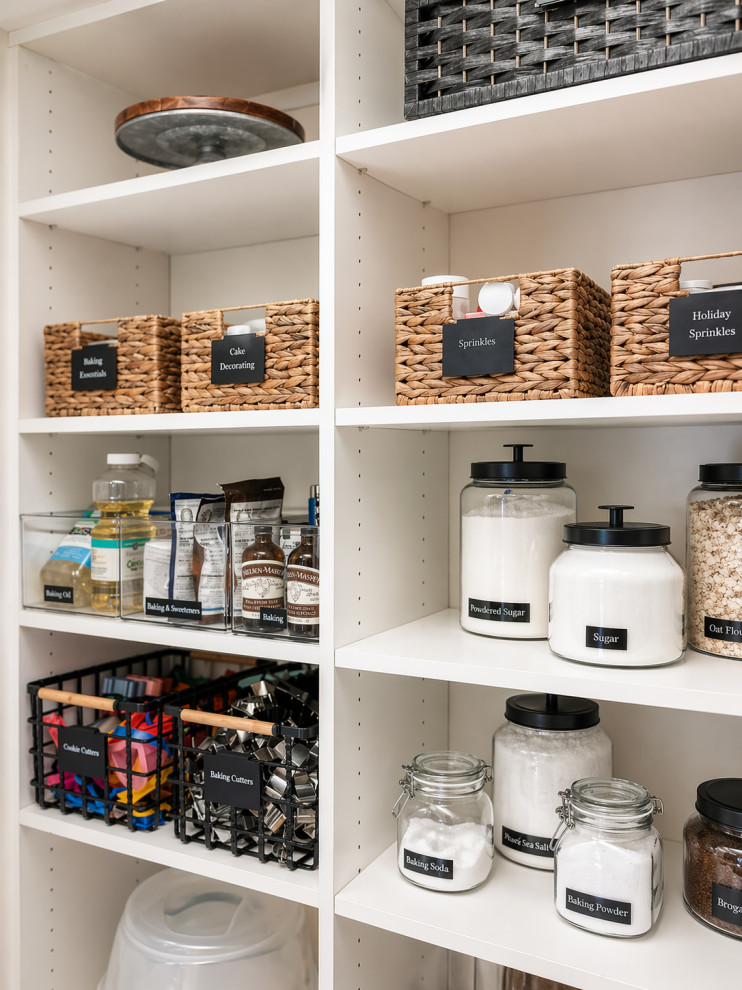
If you have ever searched for the best organizing bins online, you already know the problem: there are way too many options.
Clear bins, stackable bins, baskets, drawer organizers, storage totes, closet containers, pantry bins — it is endless.
And while it may seem like more options should make organizing easier, it often does the opposite. It becomes overwhelming fast.
At Simplify Buffalo, we work in real homes every day, helping clients create functional organizing systems that actually last. That means we have tested a lot of organizing products — and not just in theory. We have seen what works in kitchens, closets, garages, pantries, mudrooms, and storage spaces, and we have also seen what ends up being a waste of money.
I’ll walk you through how I choose which bins to use, then I’ll share some of my favorite organizing products, and finally, I’ll leave you with a few practical tips to help you find the best bin for your space.
Not every product works in every home, but some clear patterns emerge when you organize enough real-life spaces.
There Are So Many Organizing Products Online. Here is What Actually Works.
One of the biggest mistakes people make when trying to get organized is buying storage bins before they have a real plan.
It is incredibly easy to get pulled into a shopping spiral and end up with bins that are too deep, too narrow, too bulky, or just wrong for the space.
The best organizing bins should do more than hold items. They should improve function.
A good bin helps:
- Define a category
- Maximize usable space
- Make it easier to find and put away what you need.
A bad bin adds friction, wastes space, and creates a system that is hard to maintain.
After trying many different home organizing products, we consistently return to the same principle: simple, functional, well-sized bins outshine the trendy ones every time.
Storage Bins vs. Everyday Organizing Bins: What is the Difference?
When thinking about whole-home organization, it helps to separate bins into two broad categories: long-term storage bins and accessible organizing bins.
They are not the same thing, and using the wrong type in the wrong situation can make a space much harder to use.
Long-Term Storage Bins
Long-term storage bins are ideal for items you don't use frequently. These are the bins you might use for:
- Seasonal decor
- Keepsakes
- Baby clothes
- Backup household supplies
- Holiday items
- Memorabilia
- Off-season clothing
For these categories, our top choice for long-term storage bins is sturdy, durable, and protective. Depending on the area, that may mean lidded plastic storage bins, more structured closet storage containers, or clear hanging linen storage bags for soft goods. One product we use over and over is this Brightroom™ 66-quart storage bin that has both a lid and handles.
Accessible Organizing Bins
Accessible organizing bins are for the items you use regularly. These bins should help keep things contained while still being easy to reach.
These are the products you use in spaces like the following:
- Kitchens
- Pantries
- Bathrooms
- Mudrooms
- Laundry rooms
- Kids’ spaces
- Everyday closets
When we are selecting accessible organizing bins, here are the standards we usually look for:
Clear when visibility matters.
Clear bins make it easier to see what you have, which is especially useful in kitchens, pantries, bathrooms, and shared family spaces.
Handles when the bin needs to be moved easily.
If a bin is going on a high shelf or deep shelf, handles can make a big difference in usability.
Open-front designs when convenience is key.
In some zones, especially pantries and family-use spaces, an open-front bin makes everyday access easier than a fully enclosed one.
The right organizing bin depends on how often the items are used and how easily they need to be accessed. A good example is the Everything Organizer clear acrylic bins, which come in multiple sizes (both widths and depths) and function in a wide range of spaces.
The Best Organizing Bins for Kitchens and Pantries
The kitchen is one of the best places to use organizing bins well because there are so many opportunities for customization. This is also one of the areas where choosing the wrong product can make a space feel more cluttered instead of less.
Not every part of the kitchen needs the same type of organizing product. That is why we typically use multiple sizes and styles throughout the same kitchen, depending on what we are organizing.
Drawers
Drawers usually benefit more from drawer dividers and smaller organizers than large bins.
These are ideal for:
- Utensils
- Cooking tools
- Food storage lids
- Snack sections
- Spices
- Baking tools
Kitchen drawers can be surprisingly tricky to optimize. While some stores offer predetermined tray layouts that can be dropped right into a drawer, we often find that a mix of smaller bin inserts works better. That approach allows for more customization based on the drawer dimensions, the items being stored, and how the space functions day to day.
We especially like this clear drawer organizer set because it comes with multiple sizes and duplicate pieces, making it easy to customize more than one drawer from a single set.
Kitchen Cabinets & Pantry Shelves
For kitchen cabinets and shelves, we usually do not rely on just one type of organizing product throughout the entire space. Instead, we choose products based on what is being stored, how that category is used, and the size of the shelf.
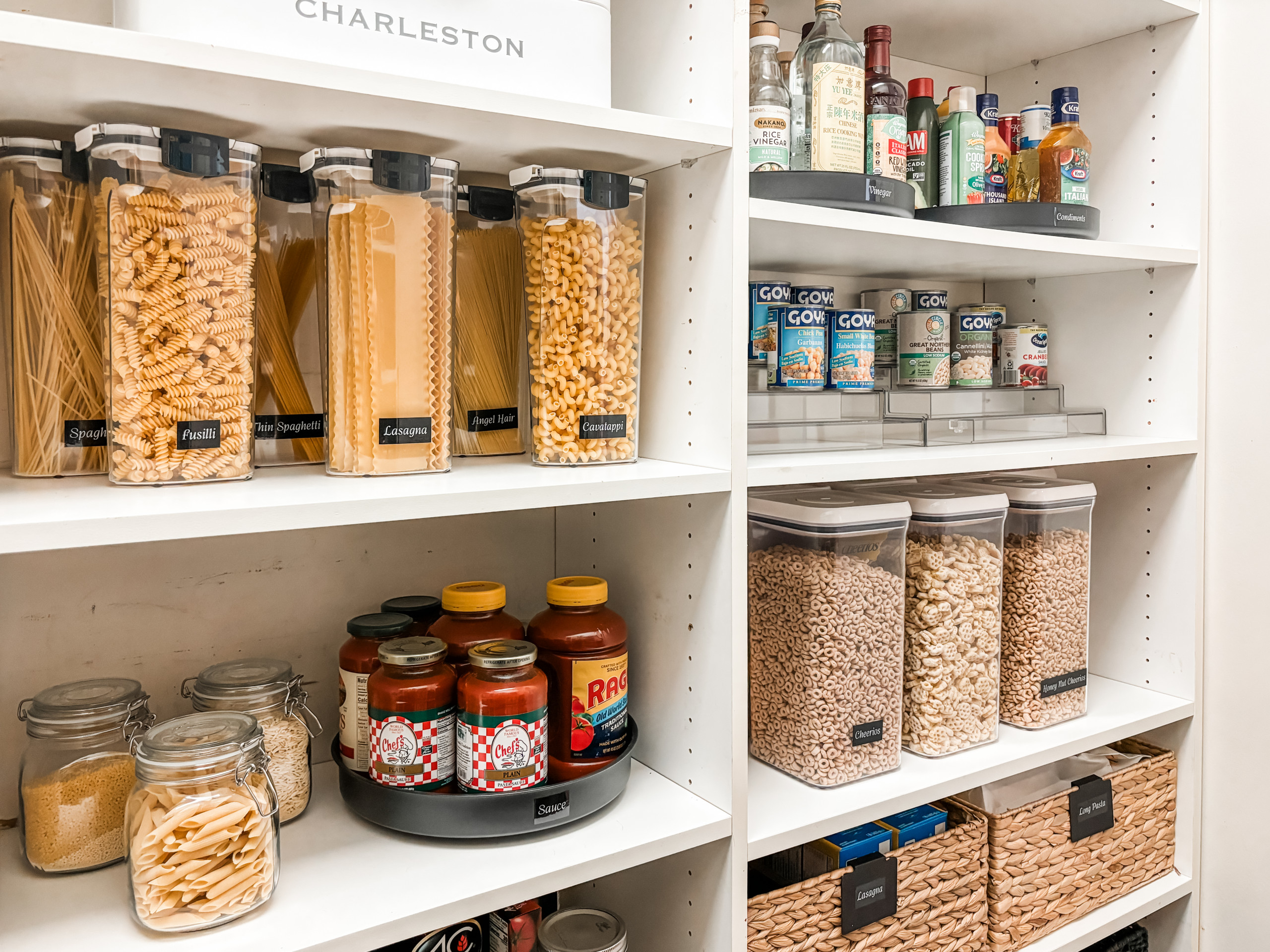
Clear canisters work well for staples like flour and sugar, turntables help bottles and jars stay accessible, divided bins keep smaller items contained, and larger open baskets are often best for snacks, pasta, or other bulky packaged foods.
For those smaller pantry categories, like condiments or oils that can easily get lost in the back, we like to use clear turntables for easier access. These large, clear bins have been a universal winner in many pantries we've organized.
A well-organized pantry works best when the product fits both the category and the space. However, careful measuring and planning is important in these spaces because no two are the same!
The Bigger Picture in Kitchens
In most kitchens, the best results come from combining a few different types of organizers based on the space and what needs to be stored.
The goal is not uniformity for the sake of appearance.
The goal is function.
Different zones in a kitchen need different solutions, and the best organizing bins for a pantry are not always the same as the best products for a junk drawer or lower cabinet.
The Best Organizing Bins for Closets
Closets can get tricky fast because they often need to do a lot. In one space, you may be storing everyday clothing, accessories, overflow items, seasonal pieces, and longer-term storage.
That is why the best closet organizing products are usually the ones that help define categories while making the most of the shelf and hanging space you actually have.
The first step is deciding what needs to stay accessible and what can be stored more fully out of the way.
For Everyday Closet Use
The goal is to keep things contained without making them harder to use. If a bin is too deep, too bulky, or awkward to grab from, the system usually does not last.
We often like structured fabric shelf bins with handles for everyday closet organization because they keep loose categories tidy, make shelves look more streamlined, and are easy to pull down when needed. These work well for:
- Accessories
- Overflow clothing
- Smaller grouped categories
- Anything that tends to get loose on the shelf
They work especially well for accessories, overflow clothing, smaller grouped categories, or anything that tends to get scattered across a shelf. Our go-to choice for closet-organizing bins is these Fabric Storage Bins. Make sure you measure so that you buy the ones that will really maximize your space!
For Upper Shelves and Long-Term Closet Storage
Upper shelves need contained storage, otherwise things will get lost and forgotten. This is where closet bins can help protect items, create cleaner groupings, and make better use of vertical space.
- My budget choice is these inexpensive plastic bins from Target
- For a higher end look, I love the Kiva bins from The Container Store
Either of these are a great fit for seasonal items, backup pillowcases, keepsakes, baby items, or categories you do not need to access every day but still want to store neatly.
How to Get the Most Out of Closet Space
Closets work best when the bins are chosen based on the shelf height, shelf depth, and how the space is actually used.
A few well-fitted products will almost always work better than filling shelves with random containers that do not match the dimensions.
Good closet organization is not really about adding more bins. It is about choosing products that make the space easier to use, easier to maintain, and better suited to your everyday life.
The Best Organizing Bins for Other Working Areas
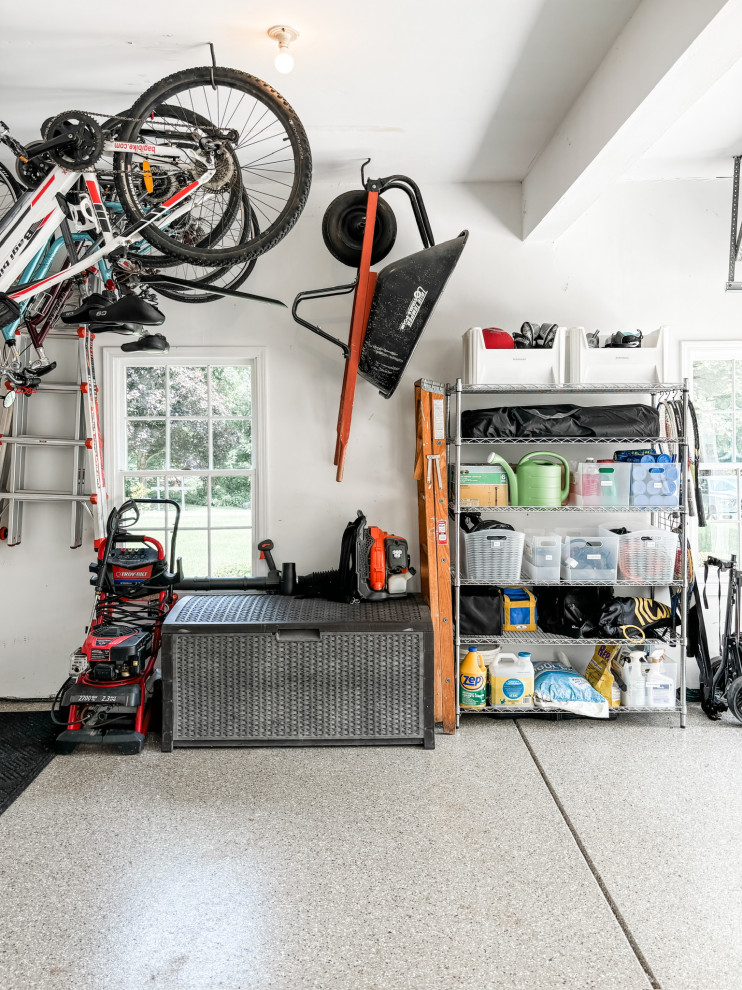
Working areas like garages, basements, and laundry rooms usually need a different approach than kitchens or closets.
These spaces tend to hold a mix of practical, bulky, and frequently used items, so the goal is to create an organization that feels durable, easy to maintain, and realistic for everyday life.
For these areas, we usually do not rely on just one type of organizing product throughout the entire space.
Instead, we choose products based on what is being stored, how often it is used, and whether the items need to stay upright, contained, or easy to grab.
Multi-purpose bins can work especially well in these spaces because they are versatile and easy to adapt. We often like The Container Store’s multi-purpose bins for categories that need a little more structure, especially items like:
- Cleaning supplies
- Laundry products
- Workshop or utility items
- Household overflow
- Grouped backstock that needs to stay upright
The goal is to match the product to the category, the space, and the way that area functions day to day.
Quick Tips to Choose the Best Organizing Bins for Your Space
If you are trying to figure out which organizing bins are right for your home, here are five practical tips that can save you time, money, and frustration.
1. Measure Before You Buy Anything
This is the most important step.
Measure the width, depth, and height of the shelf, cabinet, drawer, or closet before buying organizing products.
This prevents wasted space and helps you choose bins that actually fit.
2. Decide Whether the Items Need to Be Stored or Accessed
Ask yourself whether the items are for long-term storage or everyday use.
That one decision will usually tell you whether you need a more protective lidded bin or a more accessible organizing container.
3. Choose Clear Bins When Visibility Matters
If you need to see the contents quickly, clear bins are usually the better choice.
This is especially true in kitchens, pantries, bathrooms, and family storage spaces where multiple people need to use the system.
4. Think About How the Bin Will Be Used
- Does it need handles?
- Does it need an open front?
- Will it live on a high shelf?
- Will kids be using it?
The best organizing bins are not just the right size — they are also the right style for the space's function.
5. Do Not Buy Bins Just Because They Look Good
Some of the prettiest organizing products are the least practical.
Focus on fit, function, and ease of maintenance first. A system that works in real life will always beat one that is just aesthetically pleasing.
Final Thoughts on the Best Organizing Bins
The best organizing bins are not the same for every room, every shelf, or every home.
The right choice depends on whether you are storing or accessing the items, how the space is used, and what kind of system will actually be sustainable.
When chosen well, organizing bins can make a huge difference in how your home functions. But the best results come from choosing intentionally — not just buying whatever happens to be trending online.
If you want help creating organizing systems that actually work in your home, Simplify Buffalo helps busy families throughout Buffalo and Western New York choose the right products and build systems that are practical, realistic, and easy to maintain.