
Organizing for ADHD Brains: Creating a Home That’s Easier to Maintain
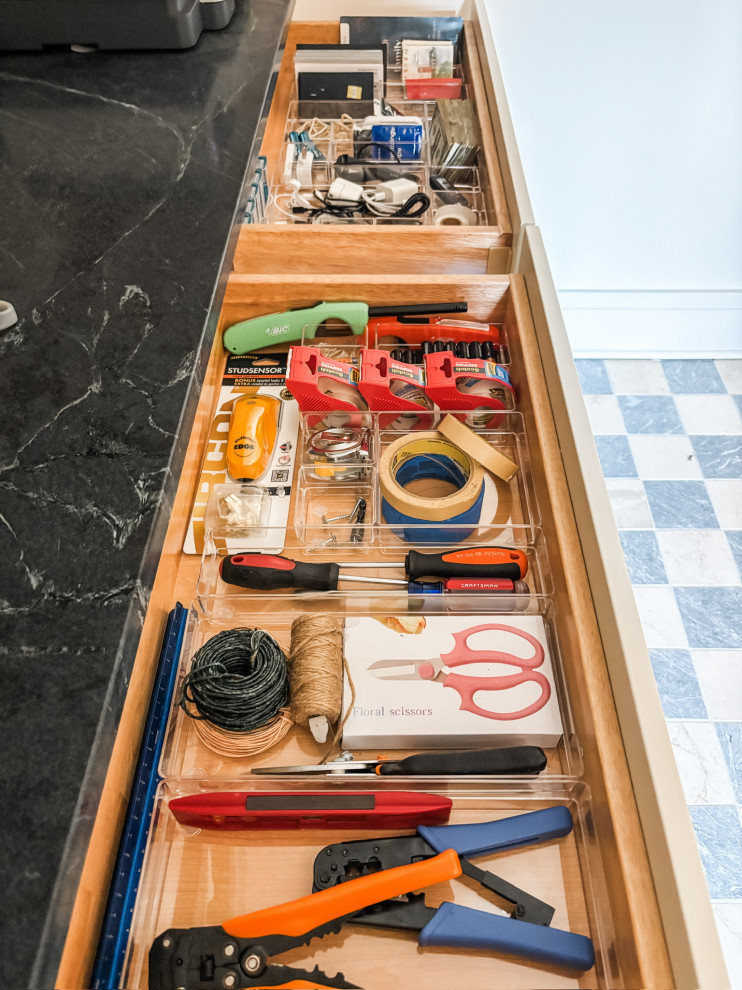
I think one of the biggest misconceptions about getting organized is that if you just find the right system, you’ll finally be able to keep everything under control.
The perfect bins. The perfect labels. The perfect routine...
But if you have ADHD or live in a household where ADHD or other forms of neurodivergence are present, organizing usually isn’t that simple.
You may know exactly what needs to be done and still struggle to start.
You may open a closet intending to organize one shelf and suddenly notice twelve other things that need your attention.
You may make decisions all day long at work, for your kids, for your schedule, for your household, and then find yourself completely stuck over whether to keep a sweatshirt you haven’t worn in three years.
I can relate to decision fatigue and task paralysis more than you might expect.
And that is one reason I think it is so important that organizing systems are designed around the person actually using them, not around what an organized home is "supposed" to look like.
ADHD and Executive Function
One phrase that comes up frequently when talking about ADHD is executive function.
Executive function refers to the mental skills involved in things like planning, prioritizing, starting a task, remembering what needs to happen next, making decisions, managing time, and following through.
Now think about how many of those skills are involved in organizing your home.
Take something as seemingly simple as organizing a bedroom closet.
You have to figure out where to start.
Then decide what stays and what goes.
Then determine what category everything belongs in.
Then decide where each category should live.
Then remember what you already decided while continuing to make more decisions.
Then actually finish the project.
And when you are done, you need a system that you can continue using every single day.
That is a lot of executive function packed into one project.
So when someone tells us, "I know what I need to do. I just can't make myself do it."
We understand.
The problem isn't necessarily that you don't know how to organize.
Sometimes the hard part is figuring out where to begin, what to do next, and how to keep going once you start.
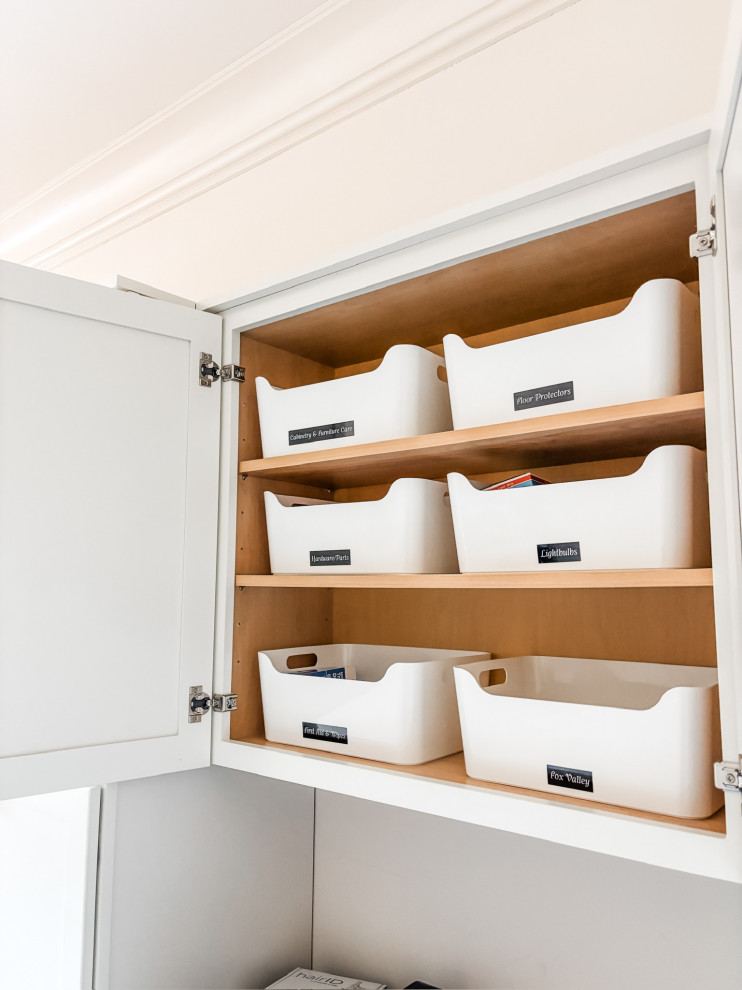
Decision Fatigue Is Real
There is a point where your brain simply does not want to answer another question.
Should you keep it? Donate it?
If you keep it, where should it go?
Or
Do we use this? Will the kids need this next year?
Should I save it just in case?
Multiply that by hundreds of items in a basement, kitchen, playroom, or closet and it is very easy to understand why people become overwhelmed.
This is one of the reasons working with a professional organizer can feel so different from trying to tackle the project by yourself.
We don't stand in the middle of the room and ask you to figure everything out.
We break the project down one area or category- sometimes one item at a time.
Instead of asking you to hold the entire project in your head, we help guide the next decision.
And when we can make a decision easier, we do.
Task Paralysis Doesn't Mean You Don't Care
Another thing we see frequently is task paralysis.
You have been thinking about organizing the basement for six months.
Every time you walk downstairs, you think about it.
Maybe you have even blocked off a Saturday to finally do it.
Then Saturday comes and the project feels so big that you don't know what to tackle first.
And so nothing happens.
Or you start in one corner, find something that belongs upstairs, bring it upstairs, notice something else that needs to be done, and suddenly the original project has disappeared.
That experience is incredibly common.
Sometimes the most valuable thing we bring into a home is simply momentum.
There is actually a term commonly used in the ADHD community called body doubling.
Essentially, having another person present while you are completing a task can make it easier to start, stay focused, and follow through.
Professional organizing naturally provides a lot of that support.
We are there.
We know what we are working on.
We keep the project moving.
And when your brain wants to wander off in twelve directions, we can bring the focus back to the next decision.
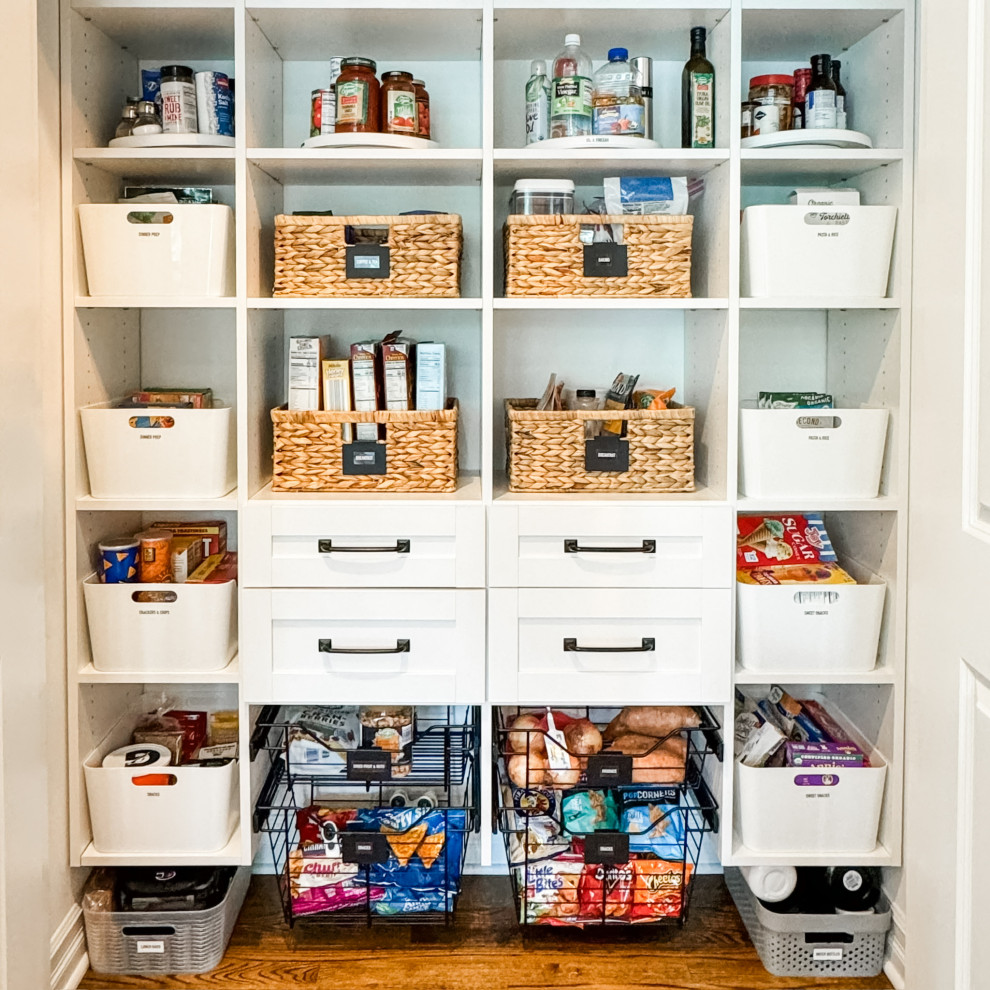
Your Home May Have More Than One Kind of Brain Living in It
This is another important part of how we organize: we aren't always designing a system for one person.
We are often organizing a home where several different people need to use the same space, and they may process information very differently.
Maybe one person needs everything tucked away because visual clutter feels overwhelming.
Another person needs things visible, or they completely forget they exist.
One child may reliably put something back into a labeled drawer, but another is much more likely to use an open basket.
One person may remember exactly where something belongs while someone else needs the storage location to be extremely obvious.
That means the "perfect" organizing system on Pinterest may fall apart almost immediately in your house.
Our job is to figure out: Who is actually using this space?
And then: What are they realistically going to do?
Not what we wish they would do.
Not what looks prettiest.
What they will actually do on a Tuesday night when everyone is tired and trying to get out the door for three different activities.
That answer matters.
We Look for Ways to Remove Steps
When we're organizing for ADHD brains or a neurodivergent household, one of the questions we ask ourselves constantly is:
Can we make this easier?
If something requires opening a cabinet, pulling out a bin, taking off a lid, putting the item inside, replacing the lid, putting the bin back, and closing the cabinet...
That might technically be organized.
But will your family maintain it?
Maybe...but more likely, probably not.
Sometimes the better solution is an open bin, or a hook, or even a clean container.
Sometimes it is keeping an everyday item somewhere slightly unconventional because that is where you actually use it.
The best organizing system isn't necessarily the one with the fewest things showing.
It's the one that removes unnecessary friction.
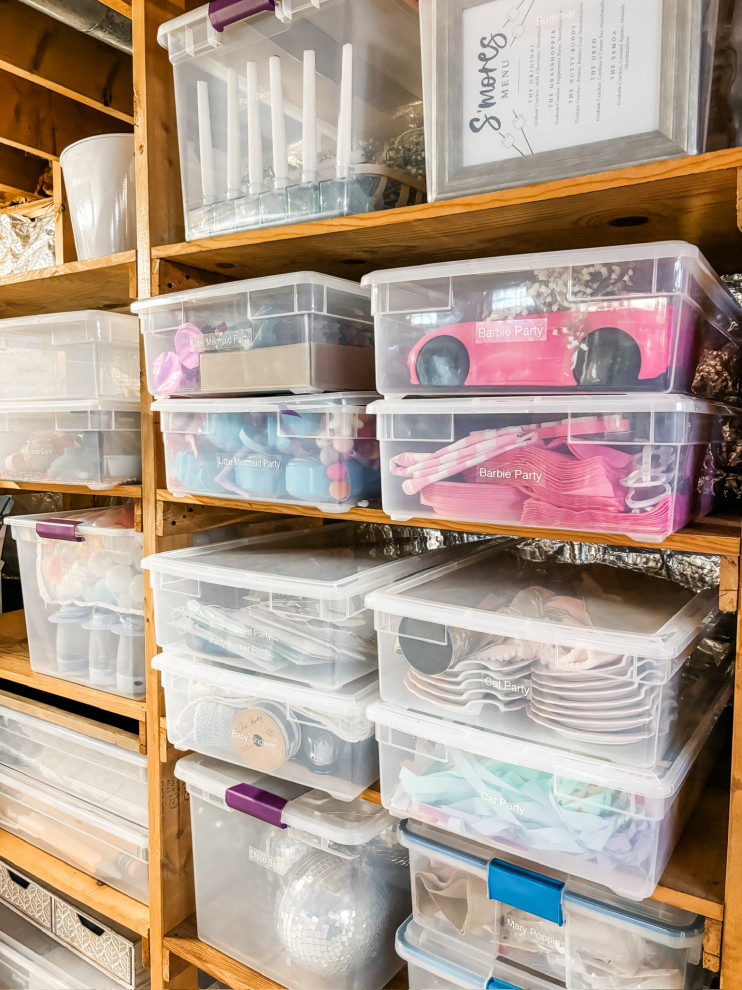
Visibility Can Matter
For some people with ADHD, out of sight really can become out of mind.
That doesn't mean everything needs to sit on your countertops.
It means we may need to think differently about storage.
Clear bins can sometimes work better than opaque ones.
Broad categories may work better than extremely specific ones.
Labels can provide a visual reminder of what belongs where.
Frequently used items may need to live in the easiest-to-access locations, even if that isn't where someone traditionally thinks they "should" go.
And sometimes we need to create visual cues so you don't have to rely on your memory to keep a system running.
Easy to Maintain Beats Perfect Every Time
This is probably the biggest thing I want people to understand about the way we organize.
A system is only successful if you can maintain it.
We could create the most beautiful pantry in Buffalo, but if every family member needs a 12-step instruction manual to put away the groceries, we haven't done our job.
The same applies to your mudroom, closet, playroom, kitchen, basement, or home office.
Especially in households where ADHD or other neurodivergences are present, systems need to be forgiving.
They need to work on your busiest days and to make sense without requiring much thought.
Sometimes that means fewer categories or larger baskets.
Sometimes it means moving something to a completely different part of the house.
And sometimes it means realizing that a system you've tried repeatedly isn't failing because you're "bad at organizing."
It simply isn't the right system for you.
You Don't Need to Organize Before We Come
If you are considering hiring a professional organizer, please don't feel like you need to get things under control before we arrive.
You don't have to clean up for us.
You don't have to make decisions ahead of time.
You don't need to apologize for the pile you've been avoiding for two years.
And you definitely don't need to feel embarrassed because you've tried organizing before and it didn't stick.
That information is actually useful to us.
It tells us what you've tried, where things naturally accumulate, and helps us see how your household actually functions.
From there, we can create something better.
Because organizing for an ADHD brain isn't about forcing yourself to become a different kind of person.
It's about creating a home that asks less of your brain.
Fewer unnecessary decisions and less steps.
Clearer homes for your things.
Systems that make sense to the people who actually use them.
And sometimes, having someone beside you to help make the decisions and keep things moving is exactly what you need to finally get started.